
Tools & Takeaways
How CEA’s Prescribed Estate Agency Agreements can Reduce Disputes in Property Transactions
13 February 2026
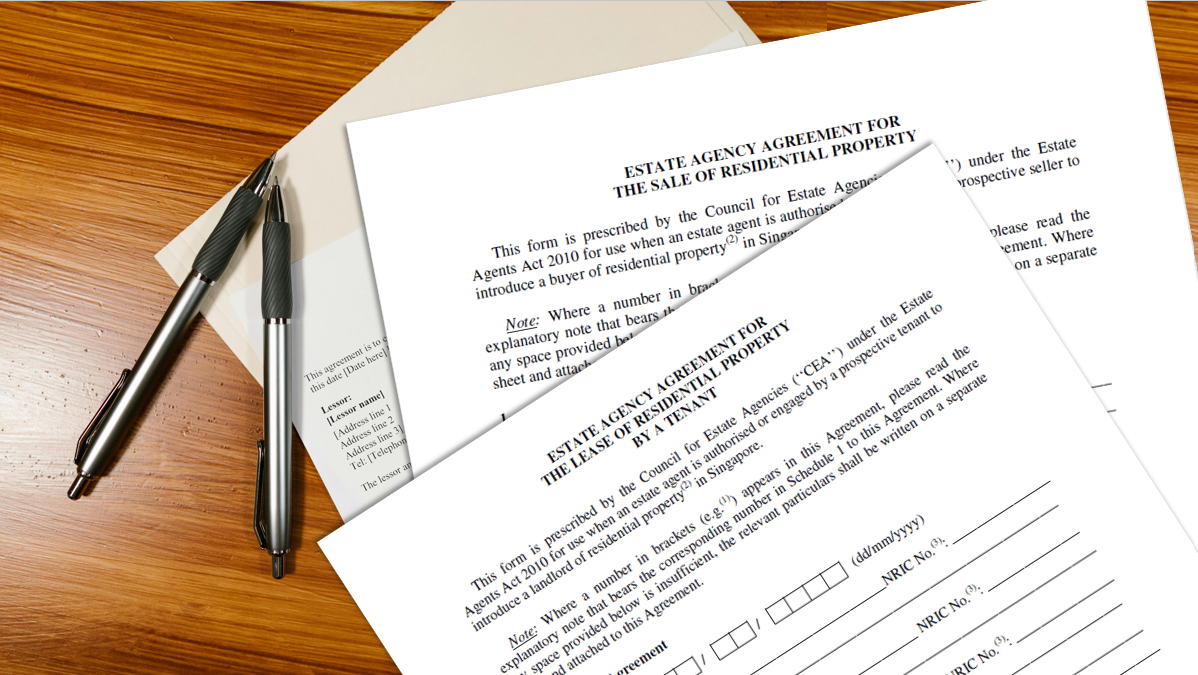
Signing CEA's Prescribed Estate Agency Agreements can help reduce potential disputes between consumers and the property agents that they engage to perform estate agency work in a property transaction.
February 2026 - 4 min read
The results of CEA’s Public Perception Survey (PPS) 2024 showed that property consumers today are increasingly savvy and aware of what to do if they were to engage a real estate salesperson (RES) – the real estate agency industry term for property agent – for property transactions such as buying, selling or renting a property.
Over 8 in 10 consumers surveyed were aware that they are encouraged to sign the relevant CEA Prescribed Estate Agency Agreement with the property agent whom they intend to engage.
And being savvy, they knew the rationale: To reduce potential disputes between both parties when a property agent performs estate agency work in a property transaction.
This is because the estate agency agreement is a contractual agreement between the property consumer and the estate agent (EA) – otherwise known as the property agency – that the property agent is registered with.
It provides clarity on the terms for which the property agent is providing services to you as the client – such as the scope of work and the commission you will pay to the property agency upon the successful completion of the property transaction.
Here’s what else you need to know:
What details are included in CEA’s Prescribed Estate Agency Agreement?
CEA’s Prescribed Estate Agency Agreement includes details such as:
The duties of the property agency and property agent
The agreed commission rate which the property consumer will pay
The requirement on the property agency or property agent to declare any actual or potential conflict of interest which may arise
Which version should I use?
As there are several versions of the agreements, remember to use the relevant version depending on the applicable scenario:
First, whether you are a buyer, seller, landlord, or tenant in the property transaction
Second, whether you prefer to sign an exclusive agreement with one property agency, or several non-exclusive agreements with more than one property agency.
What is the difference between an exclusive and non-exclusive agreement?
As a client, you can opt for an exclusive or non-exclusive agreement, depending on your needs and preferences.
The difference is summarised in the following table - adapted from CEA's webpage on what you need to take note of when engaging a property agent.
Difference between exclusive and non-exclusive agreements
Exclusive agreement | Non-exclusive agreement | |
|---|---|---|
Appointing a property agency | You can only appoint one property agency for a validity period of up to three months. | You can appoint more than one property agency to help you sell, buy, or rent a property. |
Paying commission | During the validity period, you are liable to pay commission to the appointed property agency even if you sell, buy, or lease the property through another property agency or complete the transaction on your own. Note: For three months after the validity period, you are still liable to pay commission to the appointed property agency if the property is transacted with a party introduced by the property agent of your appointed property agency during the validity period. | You need to clarify which property agency/ agencies can claim commission from you if more than one property agent from different property agencies have introduced the other party to you. You should pay commission to the property agency of the property agent which successfully helped you to complete your property transaction. |
What should I take note of before signing an agreement?
You are advised to use CEA's Prescribed Estate Agency Agreement when you engage a property agent, even if the property agent is someone you are familiar with.
Tip: Always verify the property agent’s details by checking the CEA Public Register.
Before signing any agreement, you should ask your property agent to go through the clauses in the agreement with you. You should only sign it when you have understood all clauses, including those on the commission to be paid.
Keep in mind that commission rates are negotiable. For example, you can negotiate for a flat fee instead of a fixed percentage-based commission.
If you and your property agent wish to include additional – and mutually-agreed – terms and conditions that are not in the agreement, you should add these additional terms in the space provided in the agreement form or on a separate sheet of paper.
Note that these additional terms cannot conflict with, or vary from, the prescribed terms.
When should I sign an Estate Agency Agreement?
You are encouraged to sign an agreement at the very beginning, before the property agent starts work. For example, a seller should sign the agreement before your property agent advertises your property for sale, and a buyer should do so before your property agent arranges property viewings for you.
This ensures that both parties understand their roles and responsibilities and agree on the commission amount upfront. Doing so helps to minimise disputes later.
Note: Almost nine in ten (88%) consumers polled in the PPS were asked by the property agents they had engaged to sign the CEA Prescribed Estate Agency Agreement. Two in three of these consumers were asked to do so even before the property agent had started work.
How does signing a CEA Prescribed Estate Agency Agreement help me in the event of a dispute?
In the event of a dispute, you are encouraged to approach the property agency your property agent is registered with as the first step.
If the dispute cannot be resolved mutually, you can turn to CEA’s Dispute Resolution Scheme to resolve the dispute with the property agency, provided that these two conditions are met:
You have signed a CEA Prescribed Estate Agency Agreement with the property agency; and
The dispute is one which has arisen based on the terms of this agreement.
For more information, you can refer to CEA’s Dispute Resolution Scheme webpage.
What should I take note of after completing the property transaction?
Ensure that you pay the commission, as agreed and stated in the agreement, to the property agency, and not to the property agent.
It is best that you personally handle the monies related to your property transaction and not pass or transfer the monies through your property agent. You are strongly encouraged to use verifiable payment modes such as bank transfers to prevent disputes.
(Source photo by RDNE Stock Project on Pexels)
Information accurate as at 13 February 2026